
Event Details
Xavier’s Society for Science and Innovation (XSSI)
Xavier’s Society for Science and Innovation (XSSI) of St. Xavier’s University, Kolkata (SXUK) aims to foster interdisciplinary collaboration, academic excellence, and professional development in fields such as Artificial Intelligence (AI), Data Science, Cyber security, Business Analytics, and Biostatistics. XSSI envisions a vibrant scientific community dedicated to innovation and knowledge-sharing through events, workshops, and research initiatives. The society functions as an interdisciplinary hub, fostering networking, mentorship, and global collaborations. It organises guest speaker events, hackathon, provides publication opportunities, and supports participation in conferences and science outreach initiatives. Leadership and professional development are emphasised through committee roles, industry interactions, and skill-building sessions.
XSSI’s structure consists of a core committee led by a Secretary, Assistant Secretary, and Treasurer from final-year postgraduate students in Computer Science and Statistics, while a working committee includes representatives from all academic years. Admission is based on merit, past experience, and faculty evaluation. The society upholds transparency, accountability, and discipline, with structured impeachment procedures in case of non-compliance. By fostering scientific inquiry and engagement, XSSI aspires to contribute meaningfully to national well-being, upholding the ethos of SXUK and its motto, “nihil ultra” (Nothing Beyond).
Events hosted by XSSI in XAVRANG 2025
1. Data Insights - Business Intelligence and Reporting
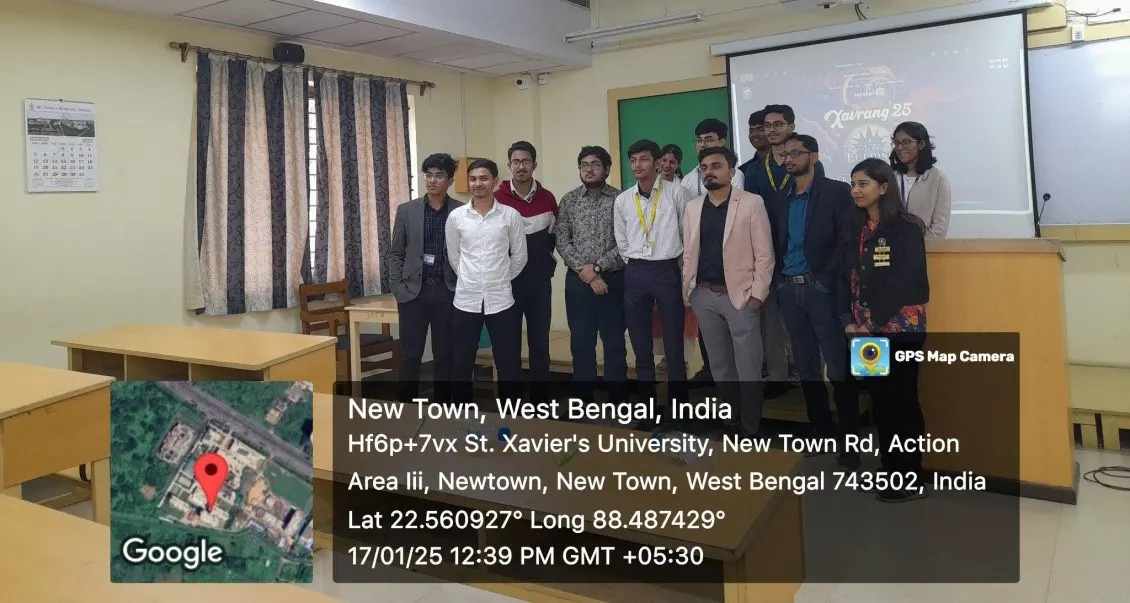
The Data Insights competition, held on January 17, 2025, challenged participants to apply data analytics in strategic decision-making. Competitors were tasked with analysing Airbnb listing performance across various neighborhoods, focusing on factors influencing booking rates, pricing strategies, and revenue potential. They were given 24 hours to conduct their analysis, generate insights, and submit a comprehensive report. On the event day, participants presented their findings, showcasing their ability to interpret complex datasets and deliver actionable business intelligence solutions. The competition, judged by Ayan Dey and Arijit Das, Co-founders and Directors of Aeonix Research and Innovations LLP, announced Tushar Bhotika from St. Xavier’s College as the winner, who bagged both the first rank and the Executive Pitch Award. Meanwhile, Tunir Adhikary and Arkadeep Mondal from Sister Nivedita University became the runners-up.
2. Creative Intelligence - AI Arts Competition
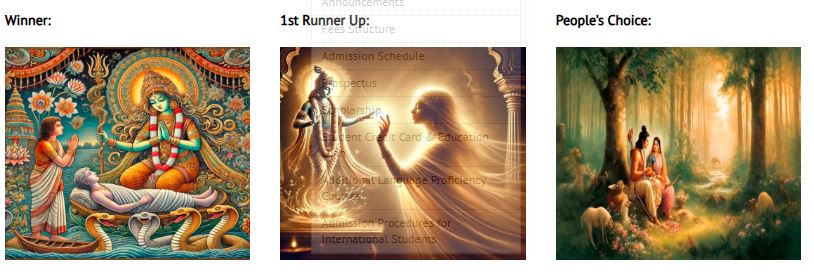
The Creative Intelligence competition, held on January 17, 2025, provided a unique platform for participants to blend artificial intelligence with artistic storytelling. Focused on the theme ‘Mythological Moments – A Journey Through Art and Storytelling,’ competitors were tasked with creating AI-generated artwork inspired by Indian mythology. Participants had to select between two themes—'An Unexpected Betrayal’ or ‘Eternal Love’—and produce a story-driven visual representation of a significant mythological moment. Submissions required three interconnected images showcasing the creative progression, a description of the mythological inspiration, and details on the AI tools or custom models used for generation. AI-generated pieces had to include prompts, while custom models required a submission of the code and methodology. On the event day, participants presented their artwork and explained the underlying story behind their creations. Ayan Dey and Arijit Das, Co-founders and Directors of Aeonix Research and Innovations LLP were the judges. Prateeti Ghosh from Gokhale Memorial Girls’ College emerged as the winner, while Shubham Gulati from Heritage Law College secured the first runner-up position. Asmita Ghosh and Shubhangee Dey from Loreto College bagged the People’s Choice award for their exceptional storytelling through AI-generated visuals.
3. Myths in Code – Hackathon
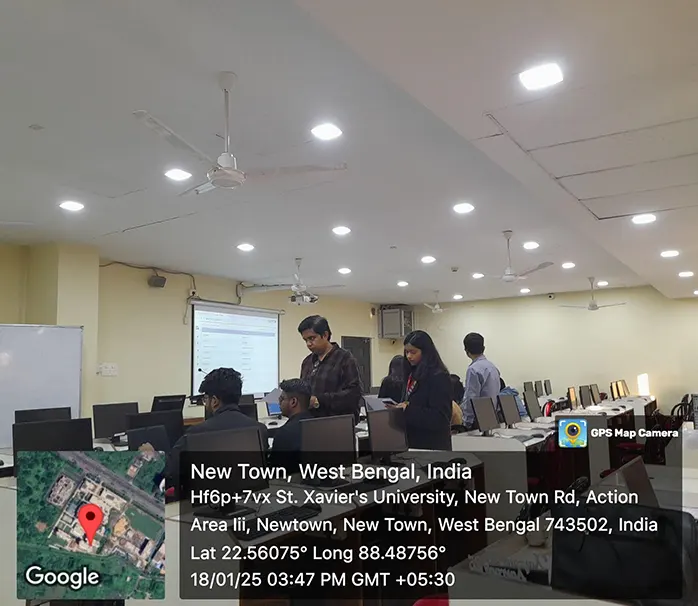
The Myths in Code hackathon, held on January 18, 2025, offered participants a series of algorithmic and programming problems designed to test their problem-solving skills and coding proficiency. Conducted on the Open Kattis platform, the competition featured 14 questions of varying difficulty levels (rated between 5 and 8 on a scale of 10), requiring contestants to demonstrate speed, accuracy, and efficiency. The six-hour contest was fully automated, with solutions evaluated in real-time based on the number of correctly solved problems, submission time, and code optimization. Competitors were permitted to use any supported programming tools, but had to rely solely on their coding expertise without external resources or APIs. Agnibha Ray and Soumyadeep Chatterjee from Netaji Subhash Engineering College were declared as winners, while Shahid Dayer and Debottam Chatterjee from St. Xavier’s College became first runners-up for their exceptional problem-solving performance.
Dr. Mrinmoyee Bhattacharya
Event Gallery